EuroCucine 2026 confirms the direction of recent years, while introducing some significant evolutions in terms of materials and color.
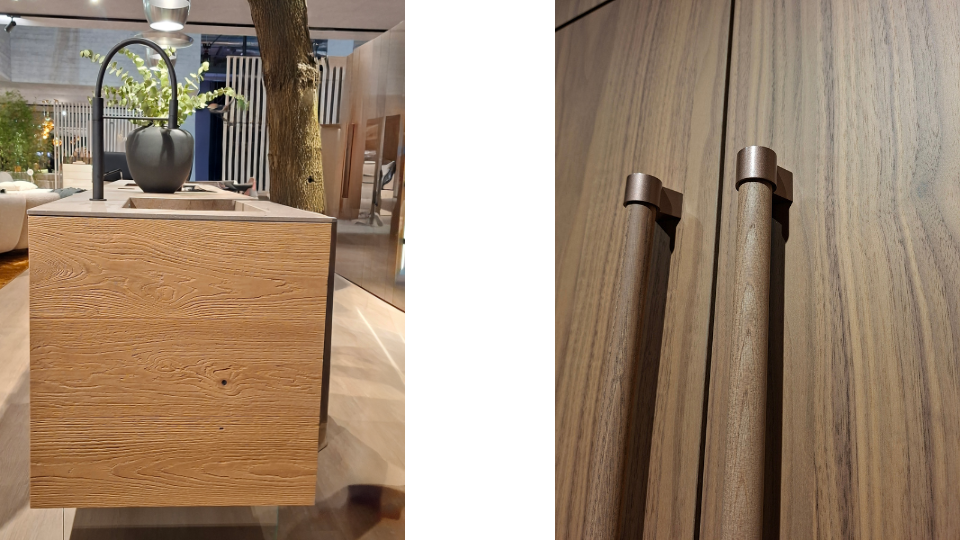
In recent years, matte and soft-touch finishes have increasingly dominated the sector, while wood has shifted toward darker, more contemporary tones. Glossy surfaces have almost completely disappeared, and lighter woods now play only a secondary role, with oak remaining the only notable exception.
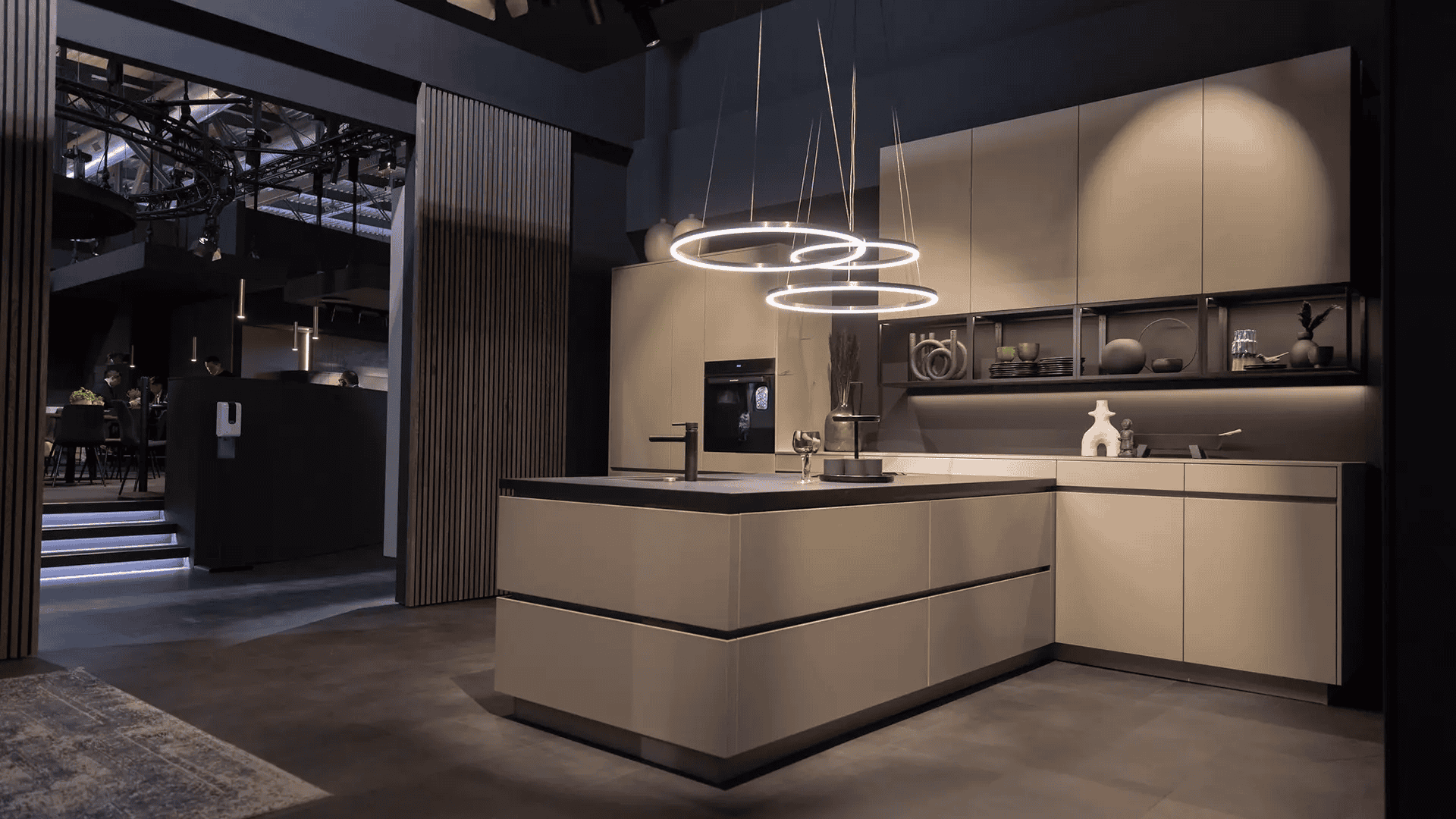
Within this context, EuroCucine 2026 continues along this path, reinforcing a color palette that, at the Salone del Mobile, features warm and natural tones — cream, sand, earth and taupe — alongside deeper, more material-driven shades such as oxide red, forest green and textured black. Green stands out as the dominant color, expressed through a variety of shades and interpretations.
Shapes are becoming softer and more fluid, in a design approach where aesthetics, technology and sustainability merge into a single language. Surfaces, color and materials are no longer separate elements, but integrated tools of communication. Matte finishes are now a well-established standard, as is the combined use of materials such as wood and glass, contributing to a more natural and refined perception of kitchen environments.
Within this scenario, a key innovation is emerging: the rise of metallic finishes. No longer interpreted as glossy surfaces, they are now presented as sophisticated, contemporary finishes, available in a wide range of grey and green tones, capable of standing out with subtlety on kitchen fronts.
Major industry brands — Schneidero, Binova, Lube and Scavolini — are now speaking a common language, aligned with this aesthetic and material direction.
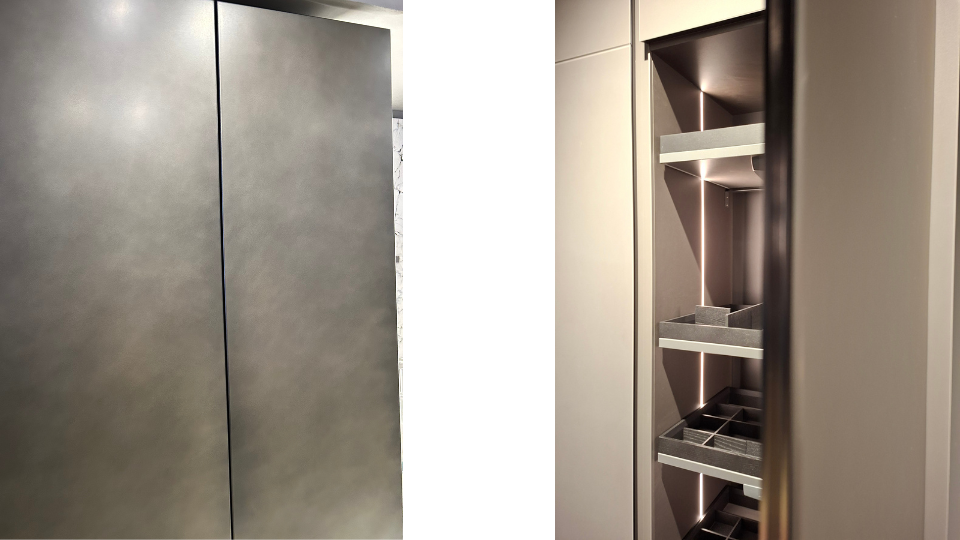
ICRO positions itself as a technical partner of reference, offering clients, distributors and manufacturers a wide range of metallic finishes, both solvent-based and water-based, perfectly aligned with the latest market demands.